
Packaging at ALBERT KREUZ
How we package our products is not a minor detail for us. Packaging must protect our items, function reliably during shipping, be practical in everyday use, and at the same time be chosen thoughtfully in terms of materials and environmental impact.
Over the years, you may have received different types of packaging from us – large folding boxes, smaller boxes, paper envelopes, glassine bags or zipper bags. This is not random, but the result of continuous development, experience and careful evaluation.
How it all started
When ALBERT KREUZ was founded in 2008 and initially focused on men’s underwear, we assumed that business underwear for men would often be purchased by women. This led to the design of our first packaging, featuring a female face and the slogan “Business underwear from her for him”.
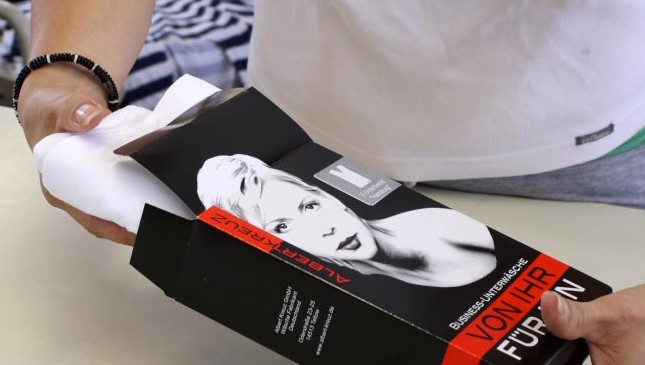
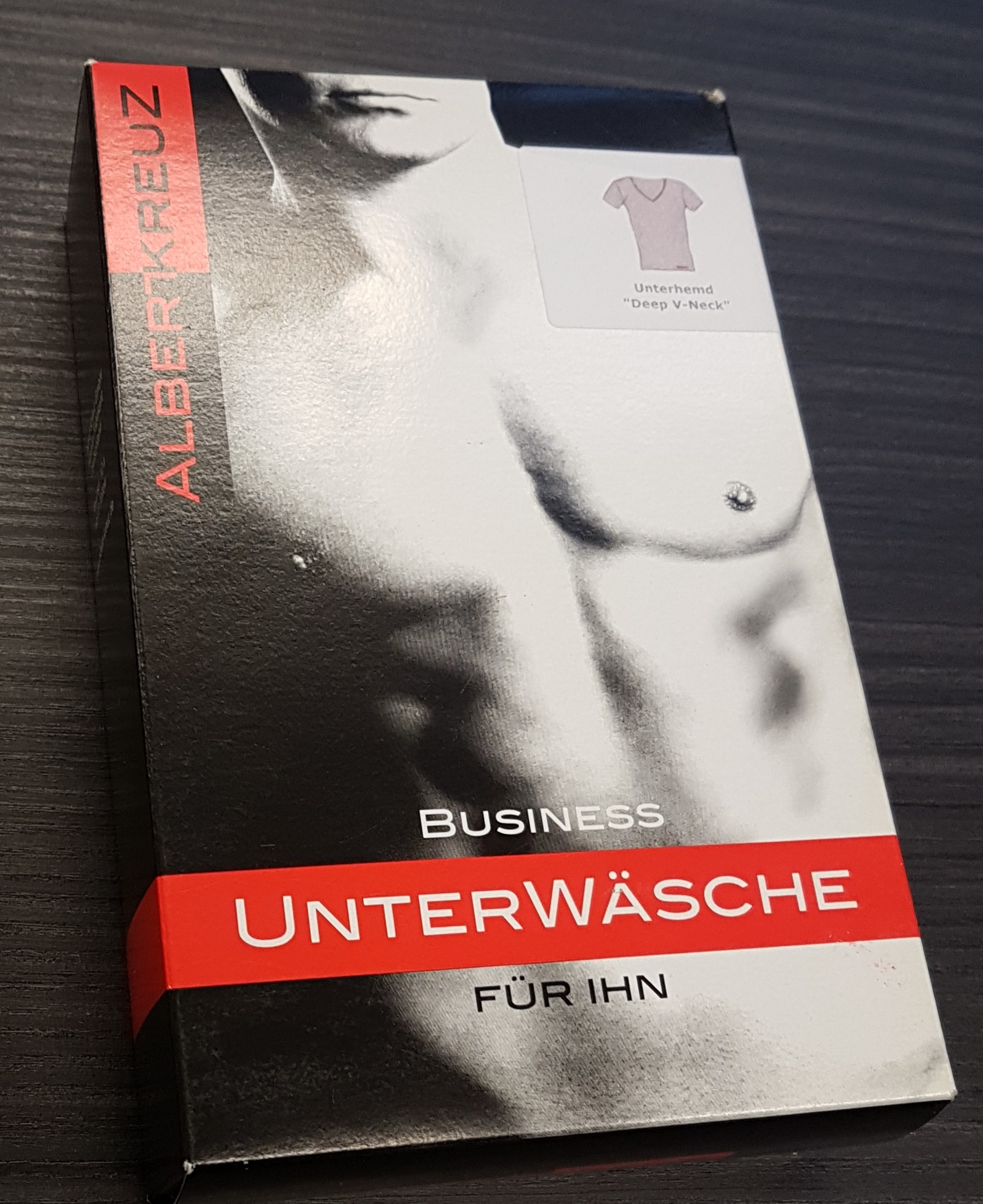
In reality, most men ordered for themselves – directly, efficiently and often after searching for terms such as “undershirt under dress shirt” or “invisible undershirt”. This quickly led to a new understanding: packaging design also needed to better reflect our actual customers.
This resulted in a redesigned folding box with a clearer and more relevant visual direction.
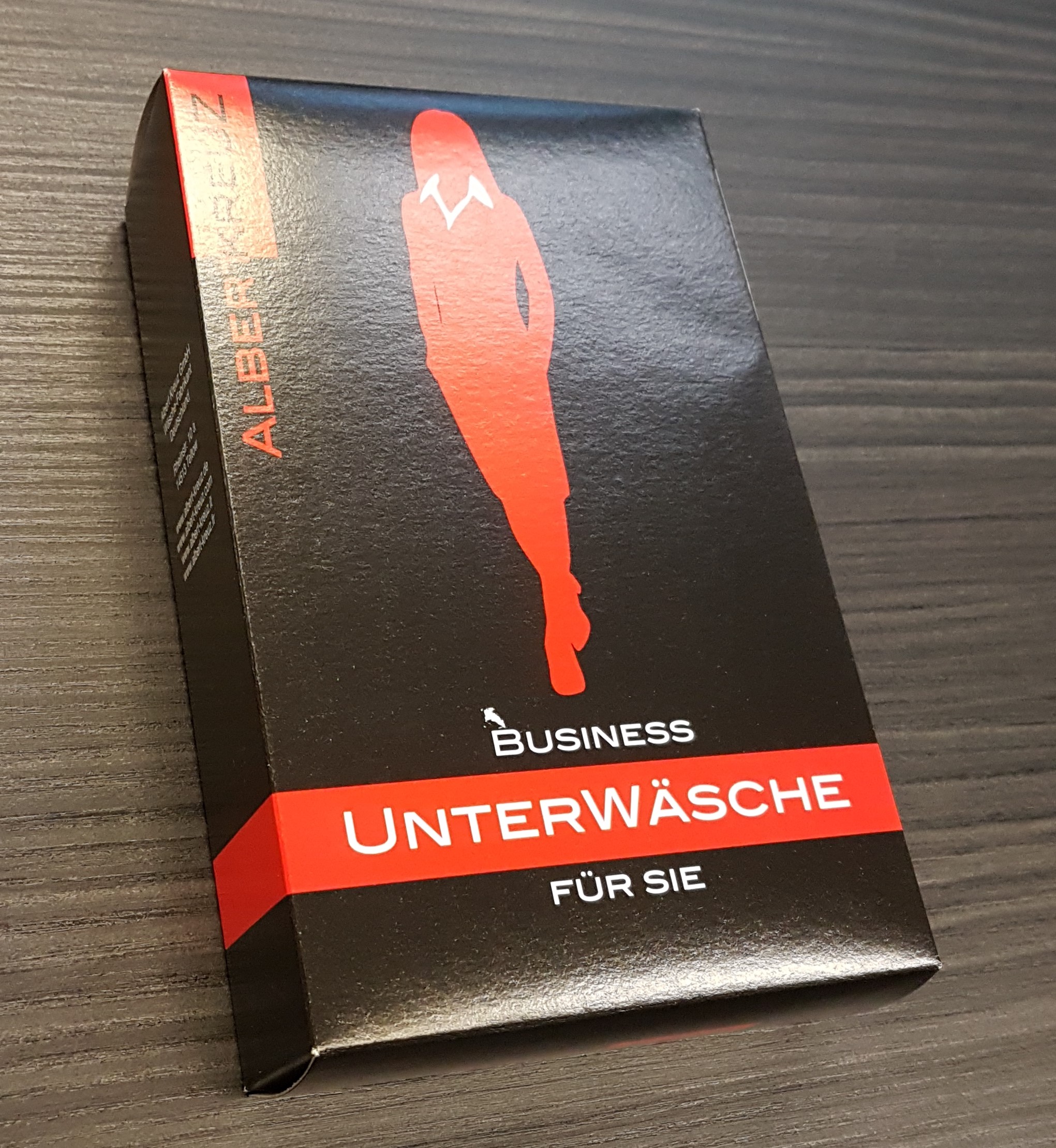
With women’s underwear came the next step
When we later introduced women’s underwear, the existing packaging was no longer suitable. We therefore developed a separate box design for the women’s collection.
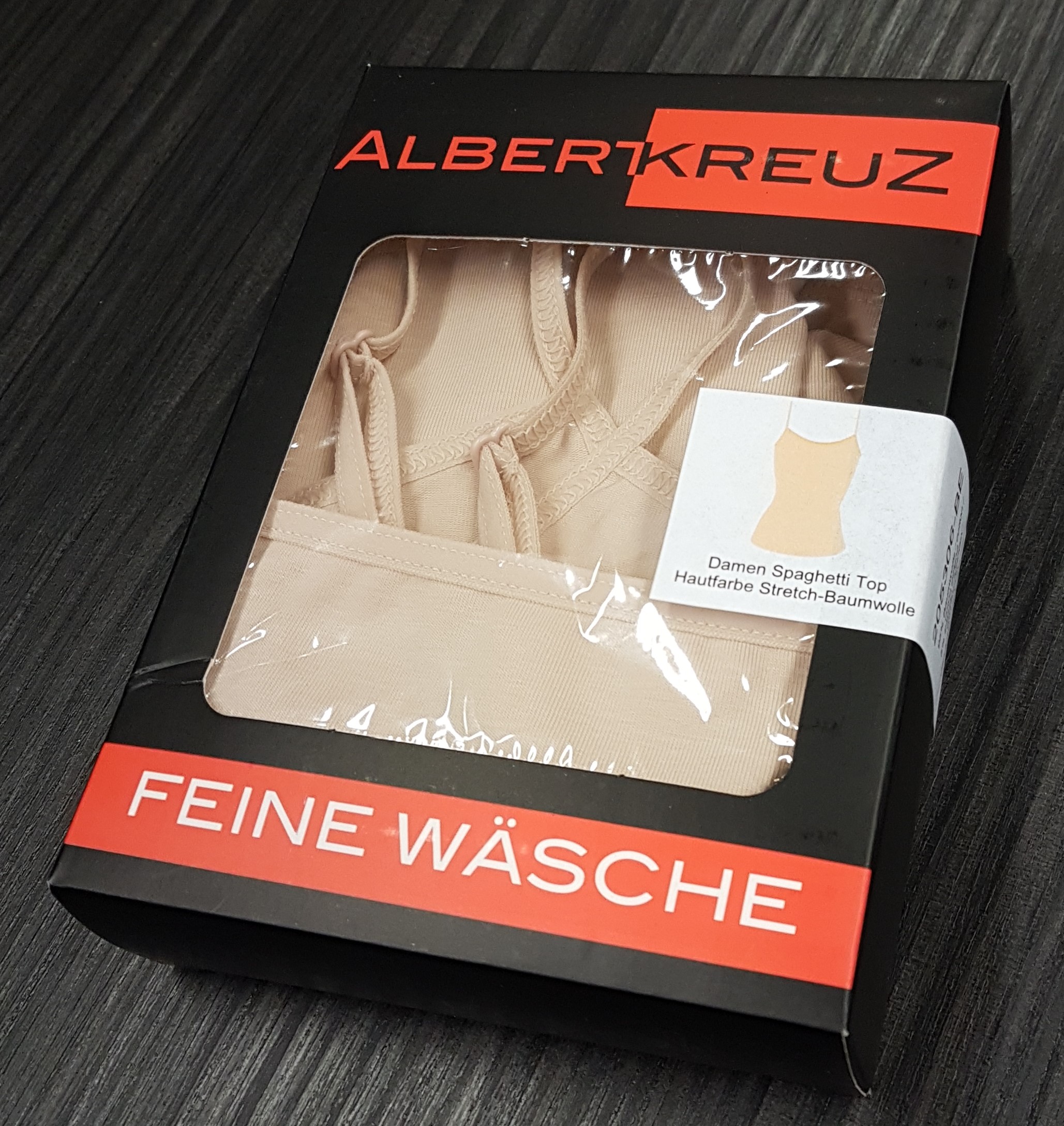
In 2018, with the expansion of production to Portugal, packaging became a key topic again. Especially for very lightweight Clean Cut products, we introduced a smaller unisex packaging format to reduce unnecessary volume.
Initially, this box featured a viewing window for easier identification.
Experience with external logistics and marketplaces
With the use of external warehouses and logistics providers, we found that attractive folding boxes were not always the most practical solution. Packaging was often damaged during handling.
We removed the viewing window and introduced a more robust version.
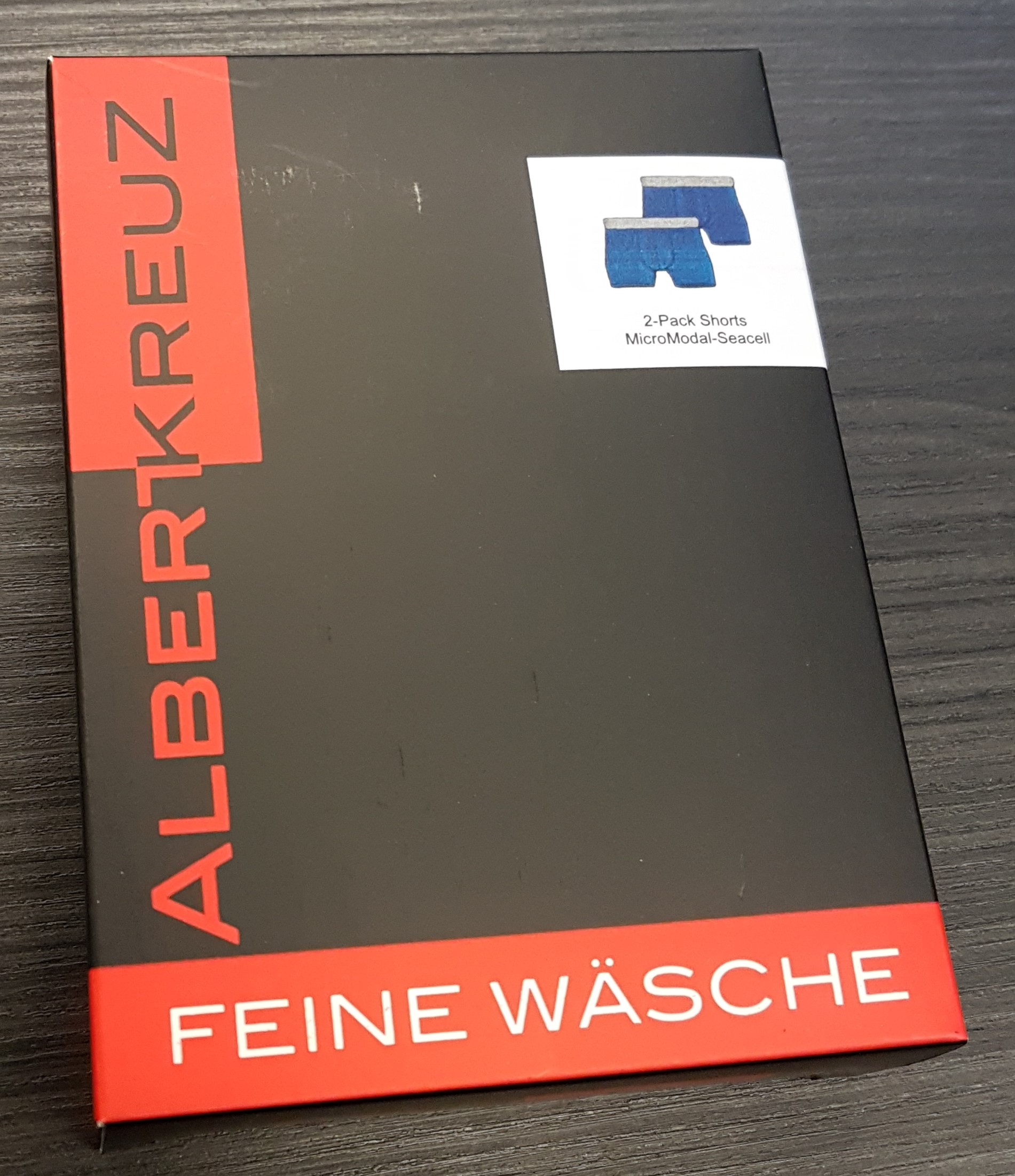
However, damage still occurred, especially in large logistics environments.
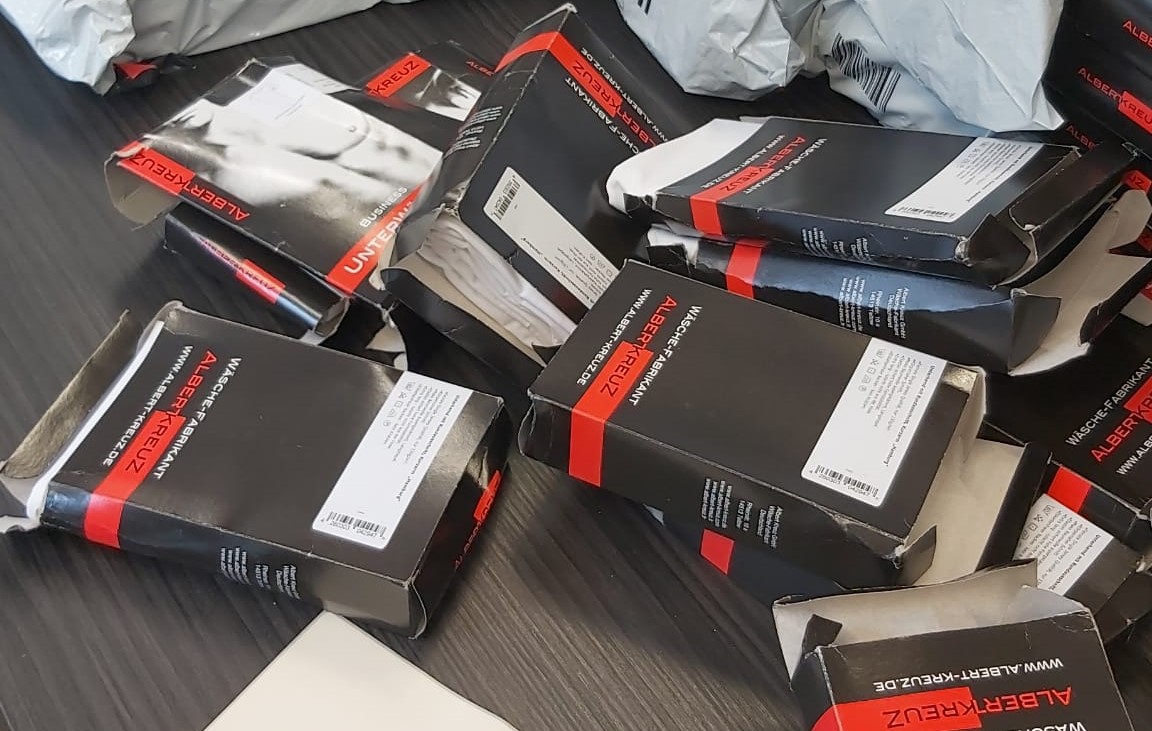
Moving towards more compact packaging
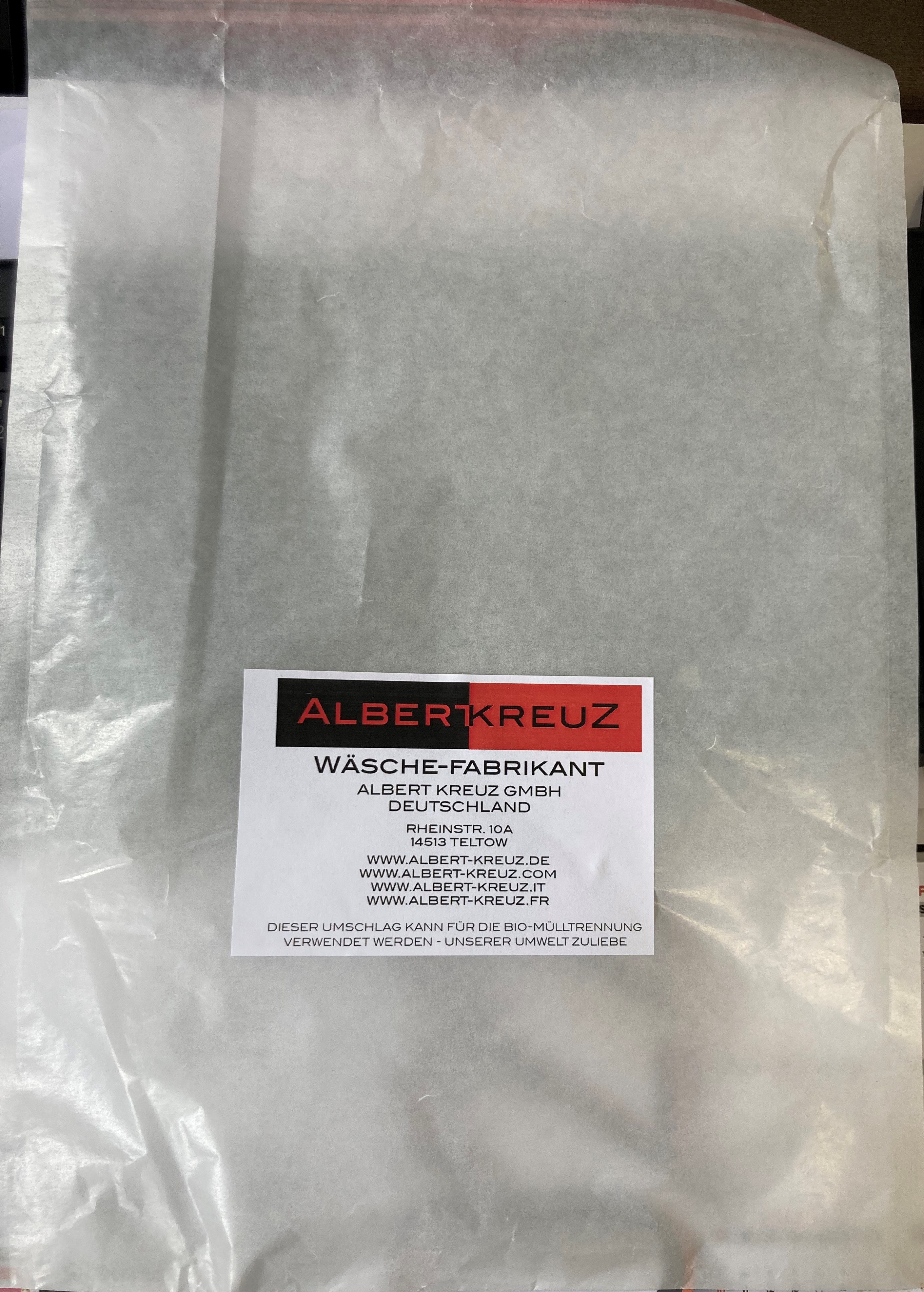
These experiences led us to test flatter, more durable and space-saving solutions such as glassine bags and recycled paper envelopes.
While these reduced volume and improved logistics efficiency, adhesive closures often proved unreliable, especially for returns.
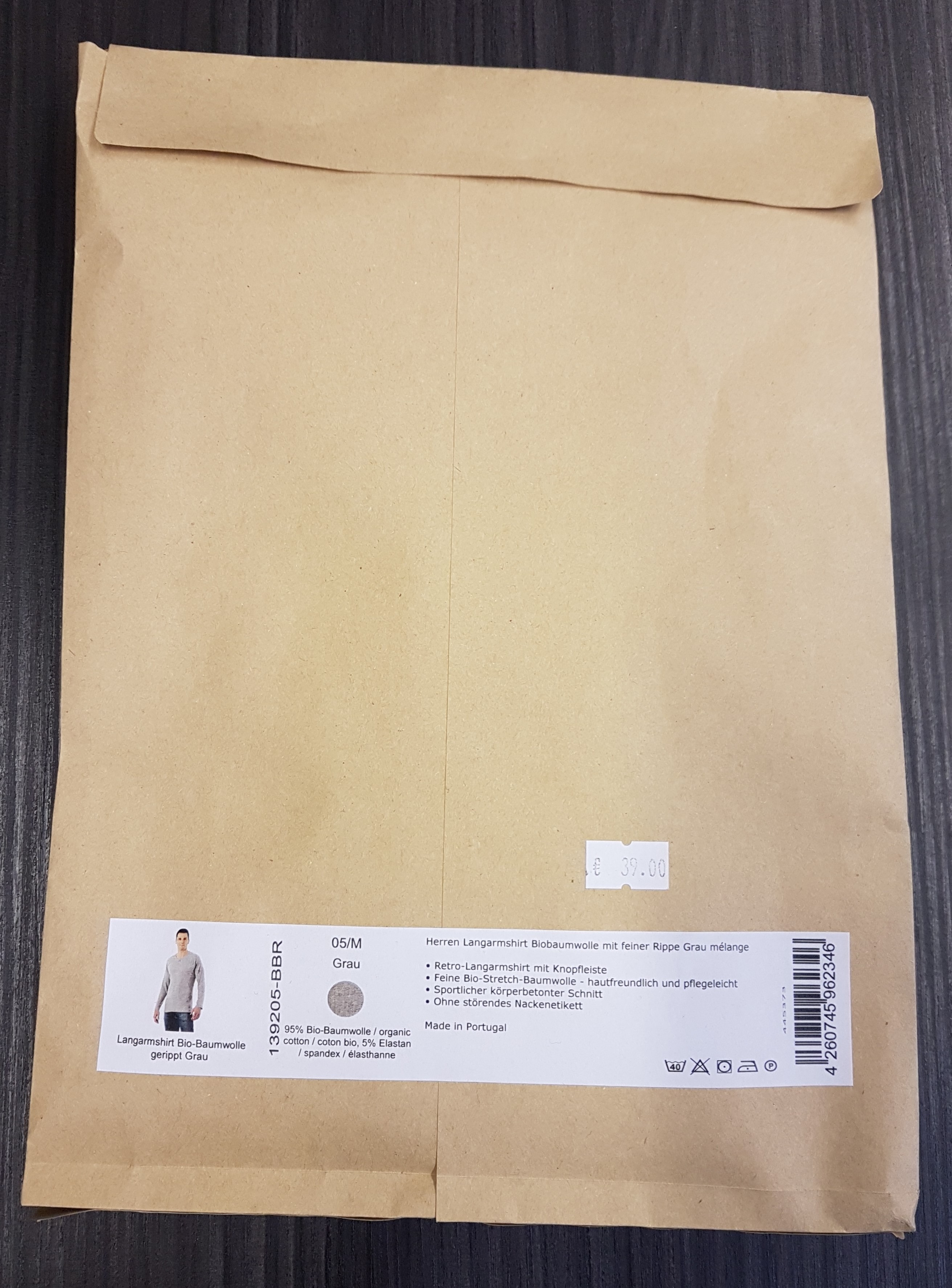
Glassine bags also appeared promising, but showed limitations in durability and reuse.
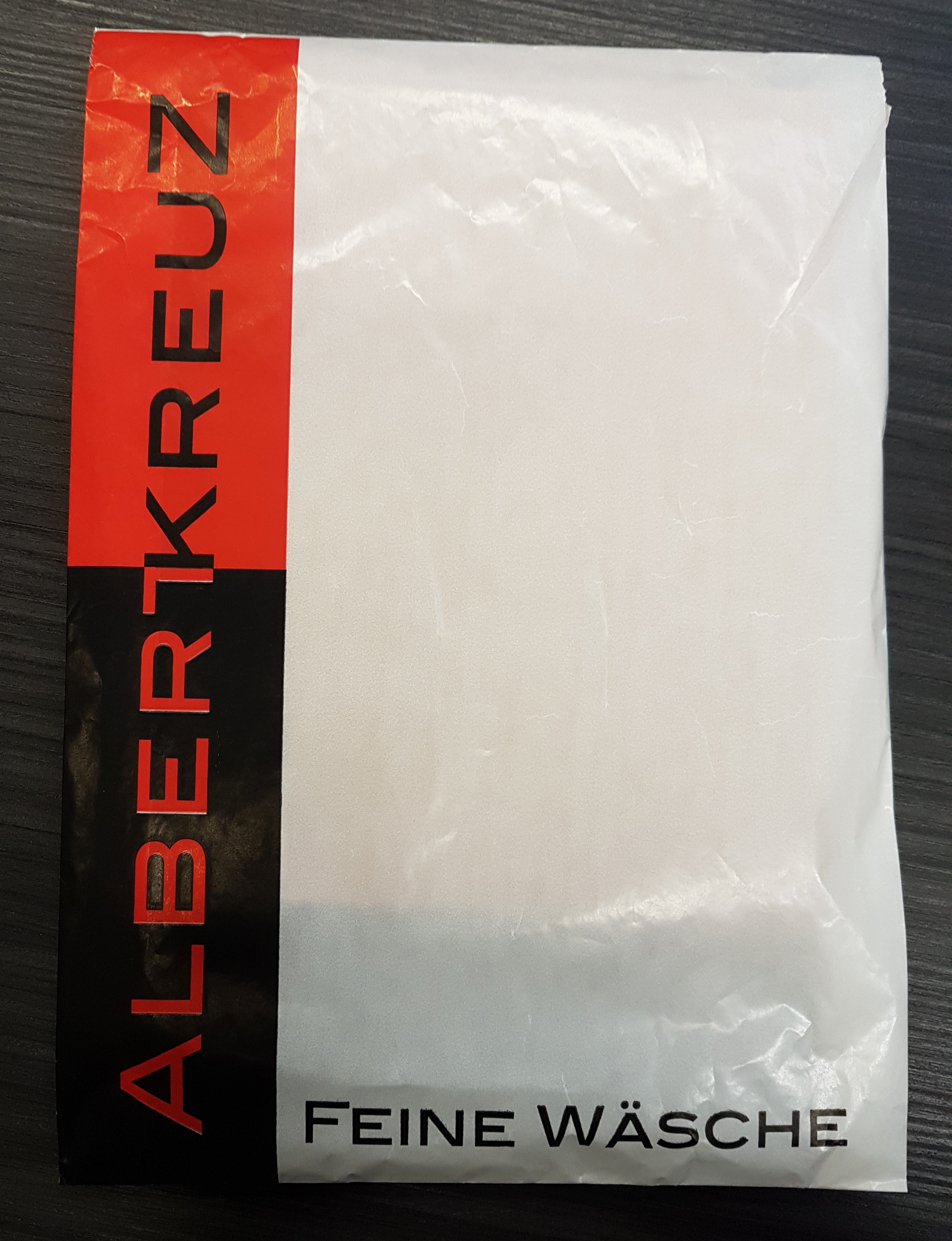
Pandemic, supply chains and costs
During the global pandemic, delivery times and costs changed significantly. Some packaging options became impractical or too expensive.
This made it clear that a long-term, reliable solution was needed.
Why we reconsidered plastic
Marketplace requirements and logistics standards often require specific packaging formats. At the same time, we observed that many customers reuse zipper bags in daily life.
This raised an important question: is a theoretically “eco-friendly” but fragile packaging better than a durable, reusable one?
Environmental impact in context
Material alone is not decisive. Weight, volume, protection and reusability all play a role.
- large box: approx. 1 liter
- small box: approx. 0.7 liters
- zipper bag: approx. 0.5 liters
Our current solution
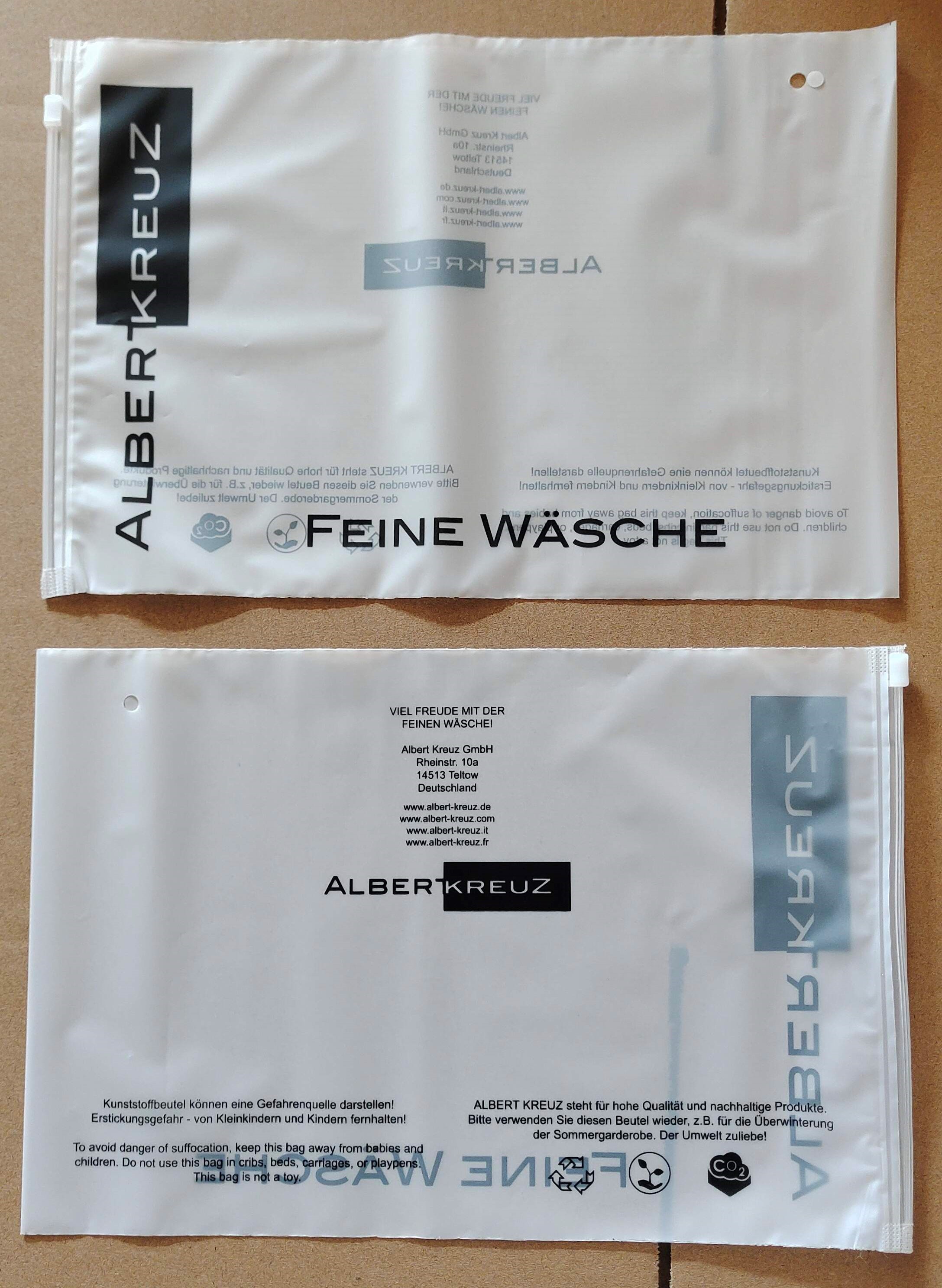
After extensive testing, we chose durable, custom-printed zipper bags. They protect products effectively, are reusable and perform well in shipping and returns.
Our approach
We consider packaging as part of the entire product lifecycle: protection, returns, reusability, logistics and material usage. Our goal is not theoretical perfection, but a solution that works in real life.
Learn more here: Sustainability at ALBERT KREUZ.